A New Approach to Mental Health Crisis Response
Across the United States, co-responder programs are becoming an essential part of how communities handle mental health crises. Traditionally, these programs pair law enforcement officers with licensed mental health professionals to respond to emergency calls involving individuals in distress.
However, the Lutheran Family Services and Fremont Police Department’s co-responder program stands out with a unique and highly effective approach: peer response.
Instead of relying solely on clinical credentials, this program integrates someone with lived experience—a peer responder who understands firsthand what it means to struggle with mental health and substance use.
Jennifer Birkhofer, Deputy Chief of Police for the Fremont Police Department, said that just because someone has clinical credentials “that doesn’t mean you have the life experiences and the learned experiences of ‘I have been through this, and we’re going to get through this together.’”
What Makes a Peer Co-Responder Program Different?
At the heart of Fremont’s model is the simple but powerful idea of connection through shared experience.
The program partners with Lutheran Family Services (LFS) to provide a peer responder who works directly alongside the Fremont Police Department and Dodge County Sheriff’s Office.
Unlike traditional responders, a peer specialist brings personal experience with mental health challenges and substance use disorder.
This lived experience allows them to connect in ways that clinical training alone cannot always achieve.
Addressing Mental Health Gaps in Rural Communities
While cities like Omaha offer a wide range of mental health services, access becomes limited in smaller or more rural communities like Fremont. In many cases, crisis services are scarce or unavailable, so individuals in distress rely heavily on law enforcement because immediate mental health support is difficult to access.
The peer co-responder program helps bridge that gap, bringing crisis intervention directly to those who need it most.
The Power of Lived Experience in Crisis Situations
One of the most impactful aspects of the program is the peer responder’s background.
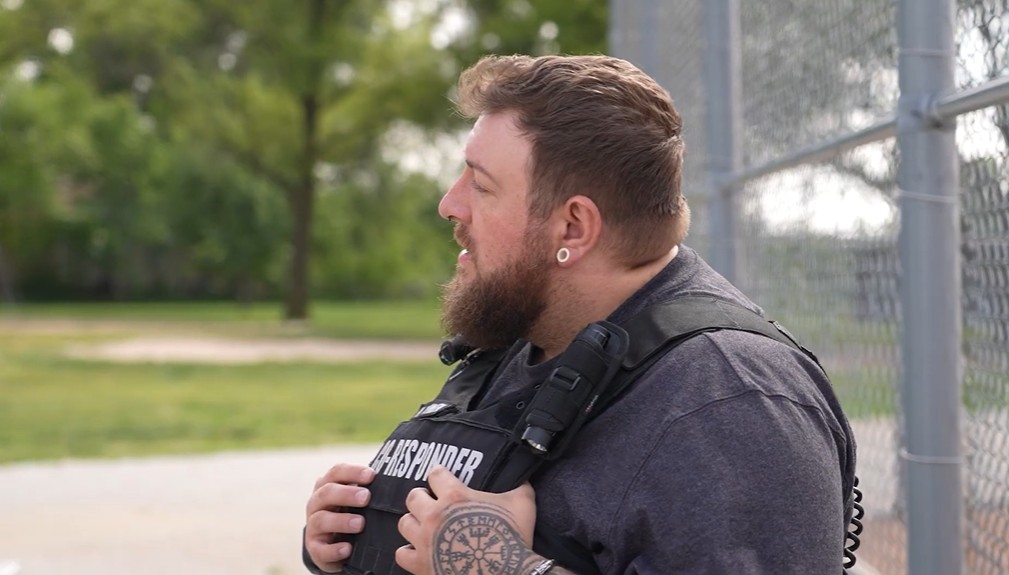
John Thomsen, the LFS Peer Responder for the program in Fremont, said, “I can relate to the person in crisis because I’ve gone through something similar myself.”
With personal recovery from depression and substance use, the responder brings both professional knowledge and real-life understanding.
This shared understanding helps:
• Build trust quickly
• Reduce fear and resistance
• Encourage openness and communication
For someone in crisis, knowing they’re speaking to someone who truly understands can be life-changing.
De-escalation: A Critical First Step
When responding to a 911 call involving mental health or addiction, the primary goal is crisis de-escalation.
This means helping individuals:
• Calm down emotionally
• Feel safe and heard
• Reach a clearer state of mind
The peer responder plays a key role in this process by offering empathy instead of authority, creating a safer emotional space for the individual.
In many situations, this approach prevents escalation and may lead to better outcomes.
A Real Moment of Impact
The impact of peer support becomes clear in real-world situations.
During one crisis call, a man struggling with anger and emotional distress immediately softened upon seeing the peer responder, John.
John recounted the situation, “The second I got out of the car, I physically saw the relief wash over him.” Instead of escalating, the person in distress approached calmly, hugged John, and said, “Seeing you was enough. I’m okay now.”
Moments like this highlight the power of human connection in crisis response—something that can’t always be achieved through traditional methods alone.
Strong Partnerships Make It Possible
The success of Fremont’s peer co-responder program is built on collaboration.
Melissa Diers, Executive Director of the Fremont Area Community Foundation, said, “The community foundation has provided funding for this because we recognized the need, and we’re pleased to see some creative approaches to addressing that need.” She added, “Having a strong response team in place for situations like mental health calls or addiction calls is super important, and it’s been a fantastic program.”
Birkhofer reinforced the importance of collaboration that makes the program work. She said, “The partnerships that are in place because of LFS is absolutely one of the most important things that we can have for the community in the mental health and substance abuse realm. Without the people in place to make those connections, our job is a lot harder.”
Key partners include:
• Lutheran Family Services, providing expertise and staffing
• Local law enforcement, ensuring immediate response capability
• Community foundations, offering critical funding
These partnerships allow the program to deliver immediate crisis support with access to mental health resources. After the initial response, the individual in crisis can receive continued care from LFS.
Why Programs Like This Matter
Mental health crises require more than a one-size-fits-all solution. Programs like this provide a more compassionate and effective alternative.
The Peer Co-Responder Program helps:
• Reduce repeat emergency calls
• Improve outcomes during crises
• Connect individuals to long-term support
• Strengthen trust between communities and law enforcement
A Simple but Powerful Mission: Lead with Compassion
At its core, the peer co-responder program is about meeting people where they are.
It’s about recognizing that many individuals in crisis feel misunderstood, that traditional systems don’t always have the answers, and that compassion can be the most powerful intervention.
As John put it, “These are people society doesn’t always know what to do with. But we don’t have to fix everything—we just have to love them.”
He said, “These are the people that God calls me to serve. These are the people that society doesn’t know what to do with. The only real answer that I have is that we don’t have to do anything with them.” John reiterated, “We just have to love them.”