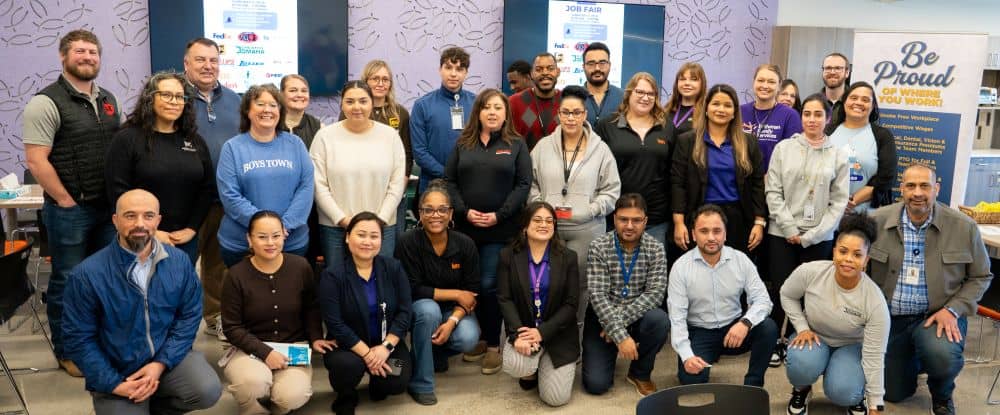
Long before the job fairs grew into the bustling, multi‑employer events they are today, they started with a simple idea from Abbas Aldoban. Abbas is the Business Services and Outreach Coordinator for Lutheran Family Services (LFS) and the Chair of the Omaha Refugee Task Force, who now serves as the Chair of the Employment Community at LFS. In 2023, he noticed a gap—newcomers living in the Council Bluffs, Iowa area had skills, motivation, and a strong desire to work. Still, they were far from Omaha’s major employers and struggled to access opportunities.
“The people in Council Bluffs are a little bit different from Omaha,” he explained. “They need to establish life and be self‑sufficient. So that is where the idea came from.”
From Two Employees to a Full-Scale Hiring Event
The very first job fair was small—just two companies: Conagra Brands and Greater Omaha Packing Company. But the results were immediate and surprising.
Abbas said. “All of them [were] hired. All of them.”
That early success lit the spark. By November of the same year, the job fair had already grown into a multi‑employer event with a strong turnout of job seekers. The momentum didn’t slow. Employers kept asking when the next fair would be, and clients kept showing up ready to work.
“We grew really quickly,” he said. “Companies were very excited.”
Building a Program That Adapts to Community Needs
The job fairs continued into 2024, though the number fluctuated depending on the challenges of the year. Policy changes related to immigration in 2025 affected the number of refugees and immigrants that LFS could resettle. For that reason, in 2025, LFS hosted only two fairs—one in May and one in September. For 2026, Abbas is planning four, spaced throughout the year to give clients consistent access to employers.
Employers from various industries attend, including production, manufacturing, healthcare services, warehousing, continuing education, workforce development organizations, and transportation companies. Some employers hire on the spot. Others schedule interviews or tours. Many bring entry‑level roles—sometimes more than twenty openings at a time. And because LFS prepares clients through classes, workshops, and one‑on‑one support, employers know they’re meeting candidates who are ready.
“The companies trust LFS,” Abbas said. “They know we take care of the clients. We stay with them step by step.”
A New Twist: Combining Job Fairs and Career Fairs
This year, Abbas is introducing something new: blending the traditional job fair with a career fair model. That means bringing in partners like Metropolitan Community College to help clients explore long‑term career paths, not just immediate employment.
“It’s different this time,” he said. “We need the career fair and job fair together. For skills, for language, for college—everything.”
For many refugees and immigrants, the first job is a “survival job,” as Abbas puts it. But the long‑term goal is stability, growth, and a career that matches their skills and aspirations. The combined fair helps bridge that gap.
A Program Rooted in Trust and Community
Abbas has been in this work since 2016. “Most of the companies know my name,” he said with a smile. “They trust LFS. They trust that we prepare our clients well.”
That trust is what keeps employers returning—and what keeps the job fairs growing. For Abbas, the pride comes not from the size of the event, but from watching clients take their first steps toward independence.
“When they come here, we help them,” he said. “We want them to be self‑sufficient. That is the idea.”
The Benefit to Employer Partners
Quality Pork International is a company that has become a consistent partner in connecting refugees from LFS to jobs in Nebraska. Human Resources Director Laura Nelson says the collaboration has grown into something genuinely impactful.
“We’ve probably participated three or four times now,” Nelson shared. “Every time it’s been very successful, very well put together.”
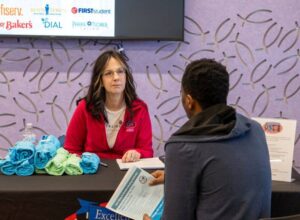
For Quality Pork International, the value goes far beyond simply meeting applicants. Nelson emphasized how deeply the LFS team understands both the employer’s needs and the job seekers they support.
“We have got some of the best applicants because the [LFS] caseworkers already know our business,” she explained. “They find applicants who they think will be successful and bring them over to talk to me. Those same caseworkers follow the applicant through the process and help them get a job at Quality Pork, then ensure they’re successful as they start. It’s a win‑win on both sides.”
That partnership has translated into real hiring outcomes. Nelson estimates that around 30 employees have joined Quality Pork International through LFS job fairs.
As the labor market tightens, Nelson says the company plans to deepen the relationship even further.
“We definitely want to partner with [LFS] because they make some of the most successful hires for us,” she said. “It just makes sense to have a good resource that ensures we can have quality applicants.”
What stands out most to her, though, is the environment LFS creates for job seekers.
“It is so well put together, and I love the diversity of the types of companies they bring in,” Nelson said. “As I see applicants come in, I know some would be suited for us and others for different employers—but what brings me joy is knowing that the people who walk in the door will have somewhere to land that really suits their skills.”
She credits the LFS team for preparing applicants thoroughly and staying engaged long after the job fair ends.
“They do such a good job at preparing applicants and continuing to partner to make them successful,” she added. “Abbas does an outstanding job—he has such a heart for the immigrant population but also understands employers’ needs. It’s a great balance that not just anybody has.”
Behind the Scenes: How LFS Brings Employers and Job Seekers Together
At this winter’s LFS Job Fair, the energy in the room was unmistakable—employers lined the walls, clients filled the LFS headquarters building, and conversations flowed nonstop. Also helping to coordinate the event was Anuprama Micek, Director of Economy, Environment, and Education at LFS, who oversees the program behind these large‑scale hiring events.
According to Anuprama this year’s fair marks a meaningful expansion. “This is the first time we extended the invitation to other departments in LFS,” she explained. “We wanted to see if we could get more clients coming in, because we have a lot of employers who are very interested in the job fair. They really do need employees, and we’ve been a trusted partner for them to host these kinds of events.”
That trust was evident in the turnout: 16+ employers and an estimated 80 clients attended—one of the largest job fairs for LFS yet.
A Changing Job Landscape
This year’s fair also reflects a shift in client needs.
“We haven’t had new [immigrant and refugee] arrivals for at least a year,” she noted. “A lot of the jobs clients are looking for now are job upgrades compared to the first job they were offered in the past.”
That means fewer entry‑level placements and more clients seeking better pay, better hours, or a role that matches their growing skills. “If their language is better, if they have a car now, or if they’ve gained experience, that definitely helps them get a better job,” she added.
Why Job Fairs Matter for Refugees and Immigrants
For clients, especially those new to the country, the job fair is more than a hiring event—it’s a chance to understand what’s possible.
“It’s a great opportunity to see how accessible employers can be,” Anuprama said. “Clients can pitch themselves for a job they’re interested in or find out what they need to be ready for that job. Maybe an employer tells them, ‘You need to get this or that done, and we can talk again in a couple of months.’ Planning ahead like that can be really helpful.”
The setup also benefits the LFS employment team. “Everybody’s in the same room,” she said. “If clients have follow‑up questions, we can answer them right there.”
That support to clients extends to resume help, mock interviews, and preparation tailored to each client’s background and goals.
“It’s a great opportunity for clients and a very beneficial event for our employment team,” she said. “Seeing employers and clients connect in real time—it’s exciting.”
There’s a reason employers like Fiserv and FedEx return to the job fair year after year: they see real results. Both companies rely on LFS job fairs not just to fill open roles, but to connect with candidates who are motivated, prepared, and supported throughout the hiring process.
For Monika Gilchrist, a recruiter who has been with Fiserv for nearly five years, partnering with LFS has become a consistent part of her hiring strategy.
“We’ve attended several events with LFS—even back when they were at the other location,” she said. “It’s always really valuable for us. We’re really interested in community partners, and we want to make sure we’re representing Fiserv well.”
Fiserv often sees a significant portion of its applicant pool come directly from these fairs. And the structure of the event—especially transportation support—makes a meaningful difference.
“I like that they bring in large groups of folks,” Gilchrist explained. “Sometimes if we’re hosting our own hiring event, we’ll reach out to LFS so they can bring transportation there as well. It adds value because candidates can see the facility and get a tour of the actual role they’d be doing.”
What stands out most to her is the variety of employers and opportunities available in one place.
“There’s always a wide range—from manufacturing to other industries—so people can choose what fits them. Not everybody wants manufacturing, and here they can explore different roles,” she said.
When asked about hiring outcomes, she didn’t hesitate.
“If we get information from 20 people, we usually see at least half move forward. And a lot of the folks we get from these events become long‑term associates, not just short‑term hires,” she said.
For Aundrea Steward, a Talent Acquisition Specialist with Federal Express who handles hiring for warehouse roles, the difference she sees in LFS candidates is unmistakable.
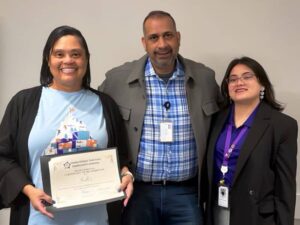
“We’ve actually hired quite a few people through these events,” she said. “For the most part, they’re looking to actually work. They’re looking to build. They’re looking to learn.”
She contrasted that with the broader applicant pool, where interest can sometimes fade during orientation or onboarding. With LFS clients, she sees follow‑through.
“They follow the whole process. They follow up. I’ve had people reach back out asking about their status. That level of determination makes a big difference.”
FedEx also benefits from the hands‑on support LFS caseworkers provide during the application process.
“The caseworkers know the process,” Steward said. “We’ll sit together during the job fair and help people apply right there. It makes everything smoother.”
A Partnership That Works on Both Sides
Employers emphasize the same positives:
• Motivated candidates
• Strong follow‑through
• Helpful caseworker support
• A well‑organized event structure
• Long‑term hires, not just quick placements
For companies like Fiserv, FedEx and Quality Pork International, LFS job fairs aren’t just another recruiting stop—they’re a reliable pipeline to workers who are ready to work, ready to grow, and ready to contribute.
Abbas said the job fairs will continue at LFS, with the next job fair date to be announced soon.
He said, “For our job seekers, work is the first language of belonging. It turns survival into a new life and fresh hope. Our job fair turns access into action. One offer can transform someone’s life and create fresh hope. One job has the power to change an entire family’s future. Hope and security begin with a single yes from the employer.”