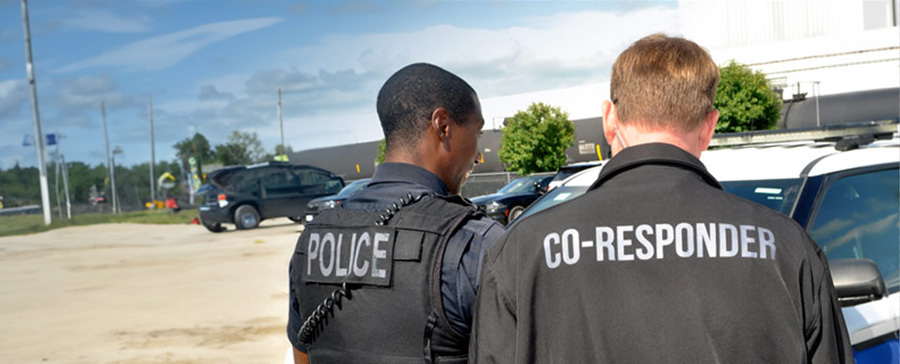
The Heartland Crisis Intervention Team (CIT) is a first responder’s mental health collaborative program. It is built on strong partnerships between law enforcement, mental health provider agencies, and individuals and families affected by mental health and wellness challenges.
In 2006, Heartland CIT was formed and began adopting the widely accepted Memphis Model, CIT philosophy to transform crisis response systems in the Region 6 area, to increase connections to effective and timely mental health services, reduce the trauma that people experience during a mental health crisis, and improve safety during law enforcement encounters with people experiencing a mental health crisis.
Over the years, Heartland CIT has expanded to serve all of Nebraska by creating regional chapters of Heartland CIT to serve the community.
Heartland CIT Provides in Nebraska and Western Iowa
CIT Training
Quality training to police officers, hospital security guards, correction officers, dispatchers, campus security guards, probation, and community corrections officers.
Crisis Intervention Partners
A Crisis Intervention Partners Training course designed for dispatchers, fire and EMS, schools, TSA, security officers, human service workers, diversion services, and educators.
Heartland CIT has achieved success by remaining a true community partner.
Contact
Rebecca Hancock
Crisis Intervention Team Program Manager
[email protected]
Bradley Negrete, LIMHP, LPC
Assistant Vice President of Health and Wellness Services
[email protected]
Crisis Intervention Team Frequently Asked Questions
What does CIT stand for?
Crisis Intervention Team
What does a CIT Officer do?
A CIT officer responds to crisis calls involving mental health and/or substance use emergencies. CIT officers aim to de-escalate, assess, and divert to behavioral health services and support, when appropriate.
What is a Police CIT Certified Coordinator or Liaison?
A CIT Certified Coordinator or Liaison serves as an ally to the behavioral health community, families, and advocates, and maintains open lines of communication with service providers, community partners, stakeholders, and the public.
When do I call for a CIT officer?
When there is an emergency involving a mental health and/or substance use situation.
What do I do if I have a mental health emergency and need a CIT officer?
In the event of an emergency, call 911 and state the emergency involves a person with possible mental illness and/or substance use.
What do I do if I do not have an emergency but still need help?
If you do not have an emergency but still need help, dial 988 for assistance with behavioral health resources and/or social services.
What do I do if I do not have an emergency but need a crisis assessment or evaluation?
If you do not have an emergency, you may call 988 for information.
Do I have CIT in my area?
Many police agencies have CIT officers and all Nebraska criminal justice professionals have access to CIT Training. Email Rebecca Hancock at [email protected].
How can I get more information about CIT?
If this is not an emergency and you would like more detailed information about CIT, please e-mail Rebecca Hancock at [email protected].
I am not a criminal justice professional, but I am interested in CIT for my professional development or organization.
We have several training opportunities for the community such as Crisis Intervention Partners, compassion fatigue, Mental Health First Aid, and many more!
If this is not an emergency and you would like more detailed information about other training opportunities, please e-mail Rebecca Hancock at [email protected].
Partnerships
Our Partnerships
Our Partnerships expand across the state now and include:
- Lutheran Family Services
- Omaha Police Department
- Sarpy County Sheriff’s Office
- Douglas County Sheriff’s Office
- LaVista Police Department
- Bellevue Police Department
- Papillion Police Department
- Metropolitan Community College Police Department
- University of Nebraska Lincoln
- University of Nebraska at Kearney
- University of Nebraska Omaha
- UNMC
- CHI
- Regional Behavioral Health Authorities (Regions 1-6)
- University of Nebraska Public Safety
- Creighton University
- Kearney Police Department
- Hall County Sheriff’s Office
- Grand Island Police Department
- Community Alliance
- Monroe Meyer Institute
- Douglas County Department of Corrections
- Sarpy County Department of Corrections
- Nebraska Law Enforcement Academy
- Nebraska Crime Committee
- Veterans Police Department
- Veterans Hospital
- The Kim Foundation
- Douglas County Detox
- Sienna Francis
- Open Door Mission
- City of Omaha
- First Responders Foundation
- NAMI Omaha
- NAMI Nebraska
- Ralston Police Department
- Fremont Police Department
- Dodge County Sheriff’s Office
- Blair Police Department
- Douglas County Communications
- Nebraska Humane Society
- Council on Alcoholism & Addiction
- Buffalo County Sheriff’s Office
- Goodwill Industries
- Behavioral Health Education Center of Nebraska (BHECN)-Central
- Midplanes Center on Behavioral Healthcare
- College of Saint Mary’s
- Douglas County Mental Health Center
- Catholic Charities
- Northpointe Recovery Services
- Pando Geriatric Counseling
- BoysTown
- Nebraska Family Helpline
- Douglas County Attorney’s Office
- Centerpointe Campus for Hope
- Generation Diamond
- Lasting Hope Recovery Center
- Nebraska Urban Indian Health Coalition
- Salvation Army
- Set Me Free Project
- Youth Emergency Services
- Together Inc.
- Women’s Fund of Omaha
Articles of Interest
- A healthier approach – Sarpy County Sheriff’s Sergeant Champions Mental Health Training
- CIT Training Improves Police Response to Mental Health Calls, But Many Rural Counties Not Yet Reached
- Law Enforcement and Mental Health – UnCOMFORTABLE 094 (Starts at 18:50 in the podcast.)
- A Happy Outcome Between a White Officer and a Black Civilian