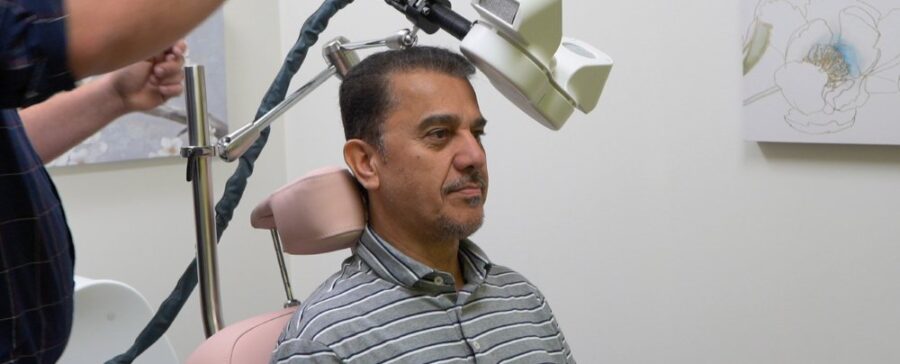
A New Path For Depression Treatment.
At Lutheran Family Services (LFS), we understand that depression affects every individual differently. While many people find relief through medication and counseling, others continue to struggle despite traditional treatment options. That’s why LFS now offers Transcranial Magnetic Stimulation (TMS), an FDA-approved, non-invasive treatment designed to help individuals experiencing major depressive disorder find new hope and healing.
What Is TMS?
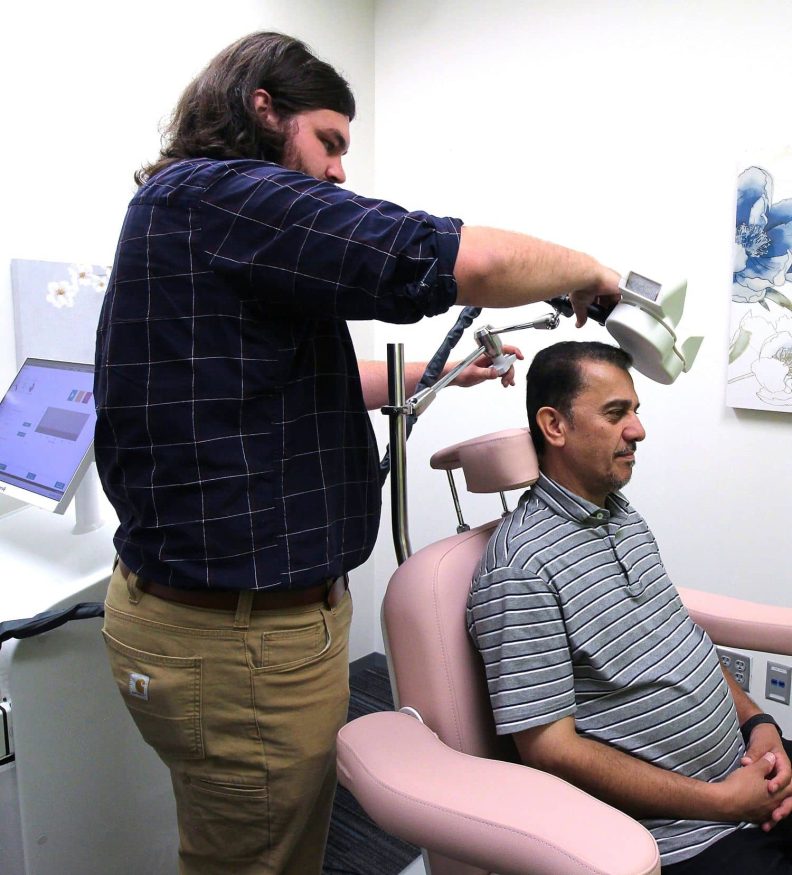
TMS is an advanced treatment that uses targeted magnetic pulses to stimulate areas of the brain involved in mood regulation. Unlike medication, TMS works directly with brain activity and does not require surgery, anesthesia, or sedation.
TMS has been FDA-approved since 2008 and has become an increasingly recognized treatment option for individuals whose depression has not improved with antidepressant medications
1. Initial Evaluation
Meet with your care team to determine whether TMS is appropriate for your needs.
2. Brain Mapping Session
Providers identify the precise location on the scalp to target the correct brain region for treatment.
3. Treatment Sessions
A magnetic coil is placed near the head. Magnetic pulses stimulate the targeted area of the brain. Sessions typically last 20 to 40 minutes.
4. Return to Daily Life
Patients remain awake during the treatment and can resume normal activities immediately afterward.
The Benefits of TMS Treatment
Non-Medication Treatment
TMS offers an alternative for individuals who prefer not to take antidepressants, have not responded to medication, or cannot tolerate medication side effects.
Non-Invasive and Safe
No surgery, anesthesia, or recovery time is required. Patients remain comfortable and alert throughout treatment.
Minimal Side Effects
The most common side effect is a mild tension headache that typically decreases as treatment progresses.
Evidence-Based Results
Clinical studies show:
- Approximately 1 in 2 patients experience significant improvement in depression symptoms.
- Approximately 1 in 3 patients achieve remission.
Frequently Asked Questions About TMS treatments
Does TMS treatment hurt?
Most patients describe the treatment as a tapping sensation on the scalp. Sessions are generally well-tolerated.
How often will I need treatment?
TMS treatments typically occur three to five times per week for four to eight weeks.
Can I drive afterward?
Yes. Because there is no anesthesia or sedation, patients can return to normal daily activities immediately following treatment.
Is TMS only used for depression?
TMS is FDA-approved for depression and OCD, and researchers continue to study its potential for additional conditions, including PTSD and other mental health disorders.
Take the Next Step.
If you have struggled to find relief from depression and want to explore innovative treatment options, TMS may be right for you.
Questions or ready to learn more? Contact the Health 360 Integrated Care clinic to talk with your team about whether TMS may be right for you.
Lutheran Family Services
Health 360 Integrated Care Clinic
2301 0 Street
Lincoln NE 68516
402-441-7940